

Forged for Field and Kitchen
How Iron Grove Tool Company turns land, legacy, and hand-forged steel into tools made to be used and passed down.
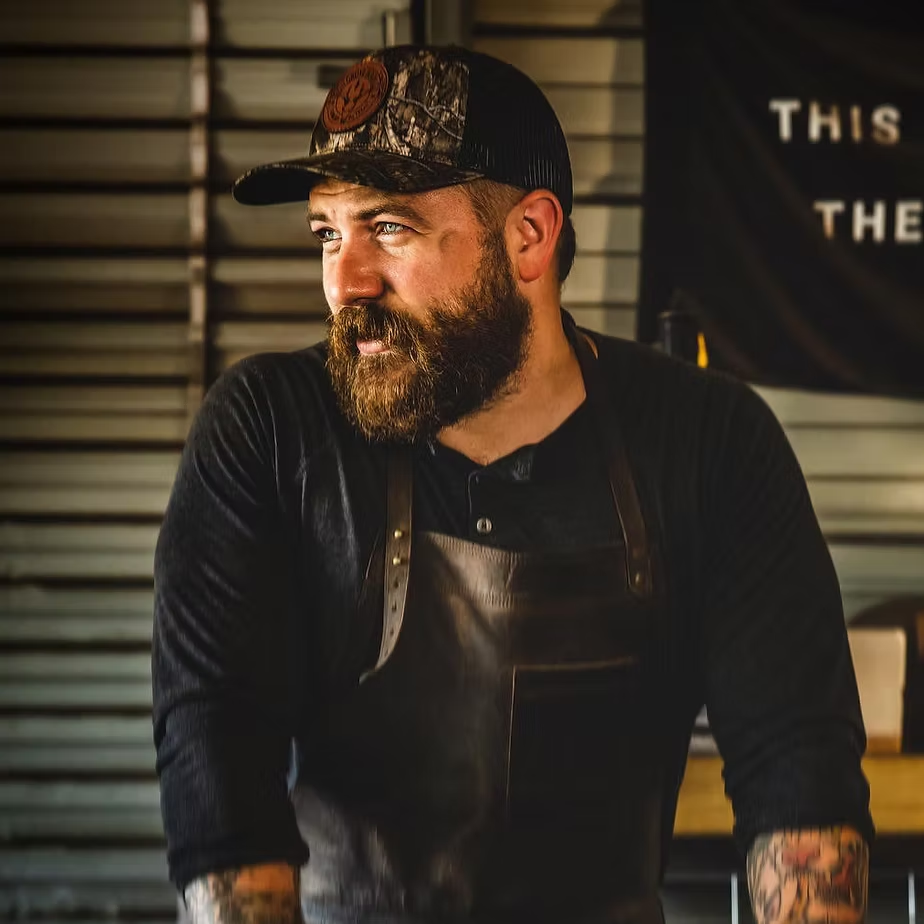
Iron Grove Tool Company is rooted in land, craft, and a slower way of working. In our conversation with founder Daniel Collier, we discuss moving out of the city, raising animals, and forging knives by hand for use in both field and kitchen. Daniel reflects on the importance of place, how lifestyle informs craft, and why staying small has become essential to making tools meant to be used, and passed down to the next generation.
Putting Down Roots in Dripping Springs
TXR: Before we get to knife making, we want to better understand your lifestyle and why you chose to put down roots in Dripping Springs?
Daniel: My wife and I moved out of Austin in 2016. We had been doing what we called hobby farming—raising chickens, above-ground gardens—and we wanted a real kind of farming situation. So we bought a couple of acres out here.
Dripping Springs has a beautiful mix of being just west of weird. It’s on the outskirts of Austin, but it’s so quiet here. Everyone that comes out this way seems to be looking for a little more peace and quiet without having to completely leave the city behind.
That was actually right about the time we started Iron Grove.
Recommended Properties
Trending in Texas

Get Texas Land Alerts
Be the first to see curated land listings from across Texas.
By signing up, you agree to receive emails from Texas Ranches. This site is protected by reCAPTCHA and the Google Privacy Policy and Terms of Service apply.
A Life Built by Hand
TXR: What does life on the land look like for you now?
Daniel: We grow a lot of our own vegetables. We raise chickens, ducks, turkeys, goats. We just got a cow—my wife bought me a cow for Christmas. I still laugh out loud about it. I start my day drinking coffee sitting with my cow, I’ve always really liked the idea of being kind of self-reliant.
TXR: Where do you think that self reliant ethos and desire for living on the land came from?
My grandparents were Polish immigrants, and they farmed in New Waverly, Texas. They had a bunch of cattle, a bunch of gardens. They raised chickens and ducks.
That was kind of a normative part of my childhood—running around in cow pastures and things like that. I actually didn’t know that wasn’t the norm until I was already an adult, it just kind of occurred to me one day, like, wait a second—not everyone gets their vegetables from their grandmother?
Every time I saw my grandmother, she’d bring boxes of peaches and tomatoes. I feel very lucky in that regard. That way of living was always kind of an escape for me, and it was always the long-term goal.
TXR: How does the slower pace of living on a farm influence the way you think about craft?
Daniel: In anything we do in our craft, any mistake is almost always solved by slowing down. If you take a breath and you’re methodical, you produce better work. It’s better for us, it’s better for our clients, it’s better for our families.
TXR: How did knife-making first enter your life?
Daniel:I decided to try to make some chef knives to impress my girlfriend at the time who was a chef. It probably took me thirty tries to make one that really made the cut. I got bit by the bug. It became something I wanted to do all the time. I have no formal education beyond an obsessive interest in the craft. In that regard, I’m self-taught.
Tools Made for the Work
TXR: How would you describe Iron Grove — and who your knives are made for?
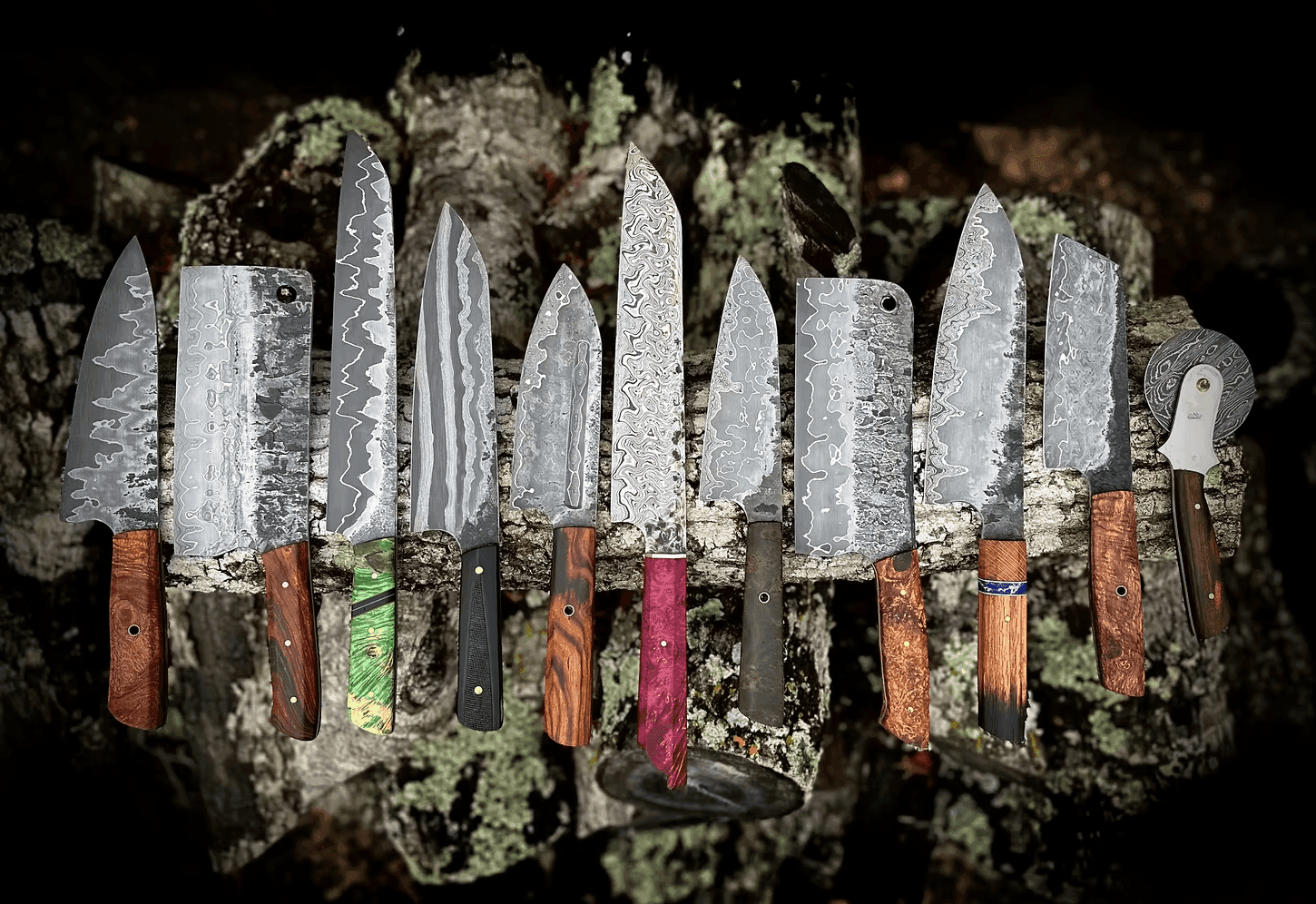
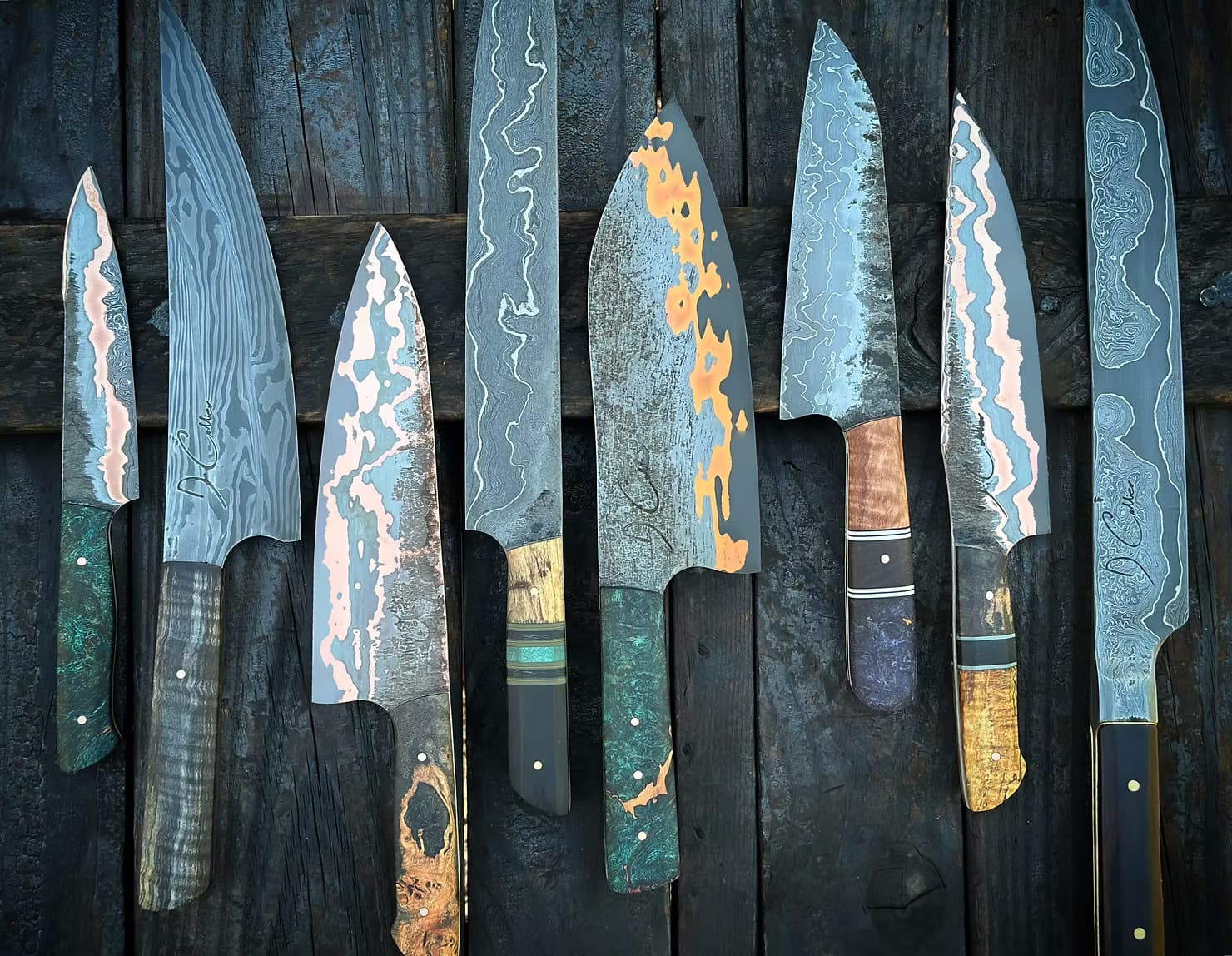
Daniel: We are primarily a culinary knife company but when I say “culinary” I mean food—and most food starts in a field. Our tagline is forged steel for kitchen and field. The steak I’m having for dinner tonight didn’t start at the grocery store. We make knives for opening feed bags, fixing fences, tending animals, processing meat. These designs come from what I actually find useful day-to-day on our ranch. Whether they’re harvesting the food in the field or preparing the meals in the kitchen, these things actually have to work.
TXR: When you think about the lifespan of the tools you’re making, what role do durability and legacy play in the way you approach your work?
Daniel: We want to do these kind of small, individually crafted items that are designed to last forever. It’s not uncommon for us to make something that has a father’s initials stamped on one side and a son’s initials stamped on the other, with the intention that this will be passed down through the family.
Old Steel, Native Wood, and Texas Barbecue
TXR: Tell us about your unique approach to sourcing materials.
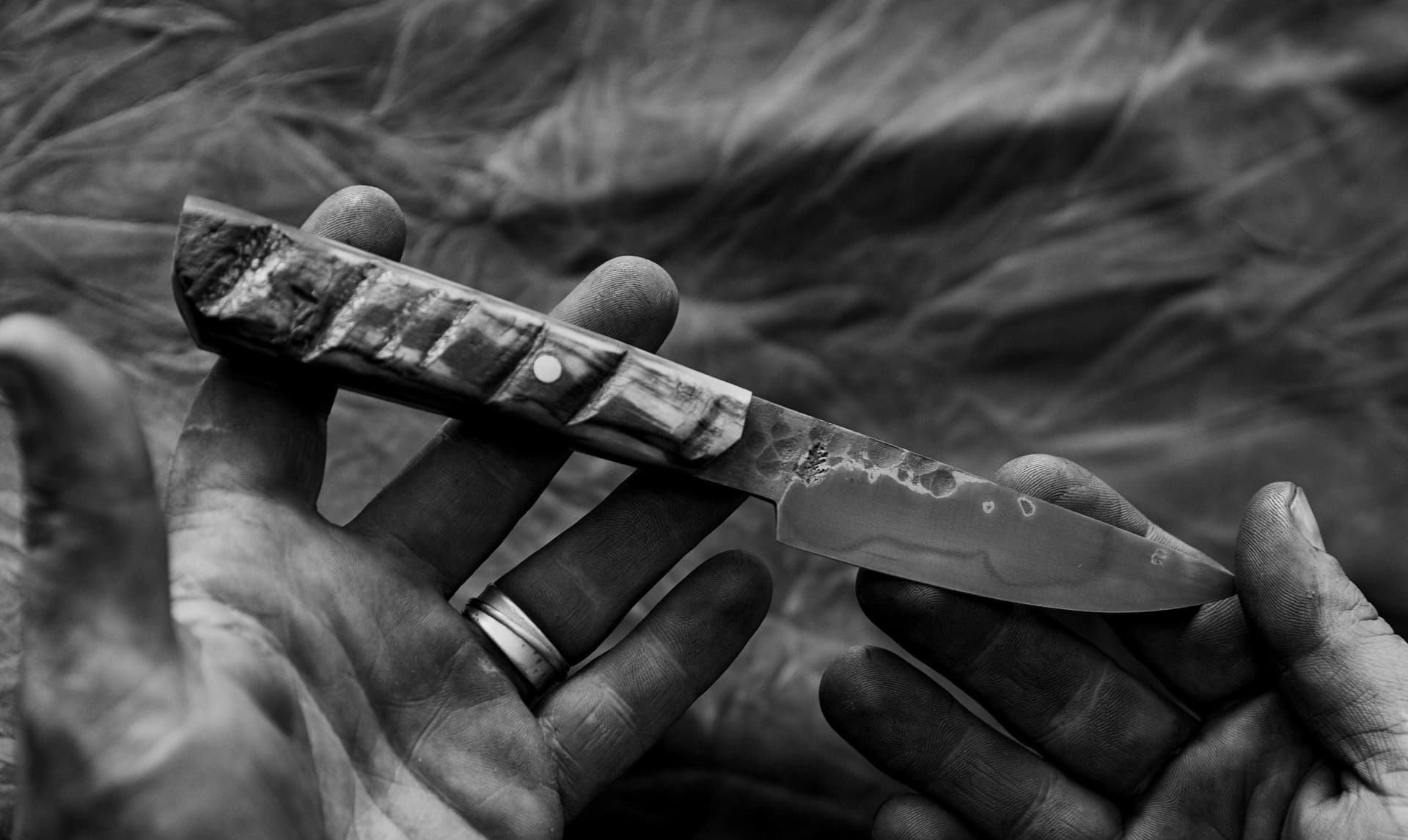
Daniel: We really got our start using reclaimed materials. Old sawmill blades, wagon wheels, things that people might hang on the wall as rustic décor. We worked with Treaty Oak Distillery for a long time, making knives out of bourbon barrels—the steel rings for the blade and the wooden staves for the handles. We also use a lot of native materials — oak, pecan, silver maple — things that actually grow in Texas.
TXR: Barbecue enthusiasts have become a big part of your audience and clientele.
Daniel: Texas barbecue is our primary clientele. And once you’re invited into the barbecue community, you don’t want to leave. People are very enthusiastic about what they do, and they’re very supportive of others doing good work.
TXR: Why is teaching and sharing your craft with the next generation so important to you?
Daniel: I think it’s important to share what you know so we teach classes at the shop. A lot of this stuff can feel mysterious from the outside, but it doesn’t have to be. When people come into the shop and see the process, it changes how they understand the work. I’ve had everyone from an eight-year-old girl to an eighty-year-old man come through. There’s been a back-to-the-land resurgence and a maker’s resurgence. Young people have a very intense interest in learning this trade.

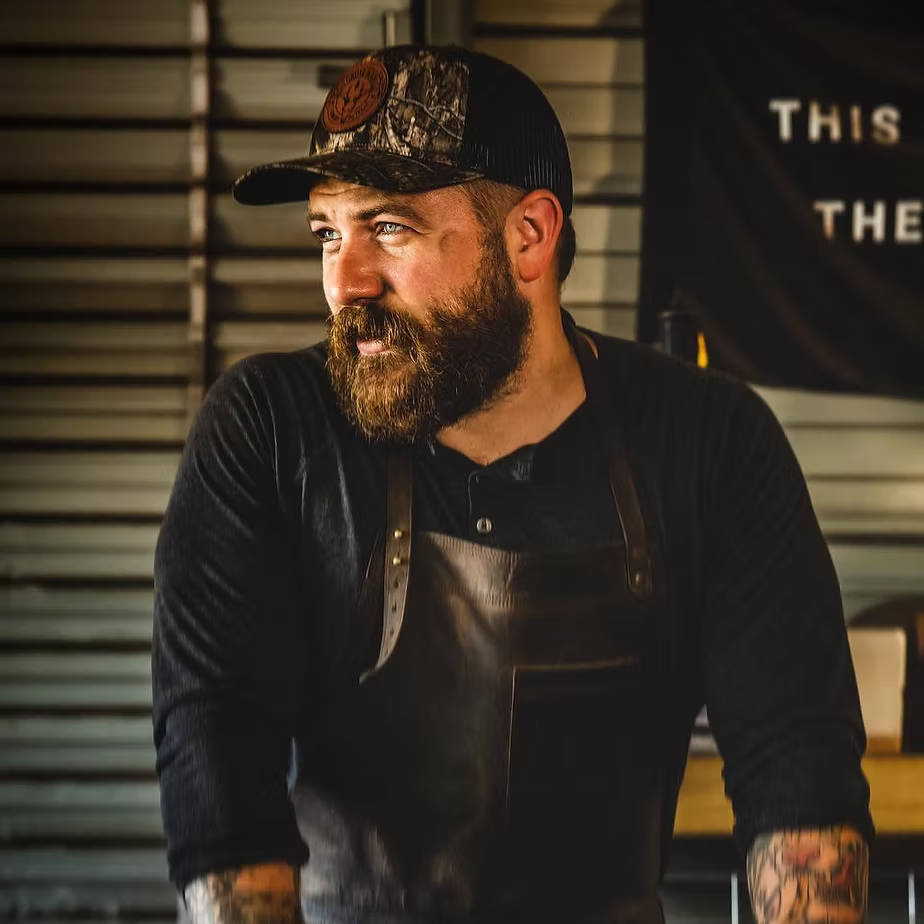
Any mistake is almost always solved by slowing down.
— Daniel Collier

Any mistake is almost always solved by slowing down.
— Daniel Collier
The Discipline of Staying Small
TXR: You’ve talked about slowing down and staying small. In a world that often celebrates growth for growth’s sake, it feels like you’re intentionally choosing a different path that prioritizes doing fewer things the right way over scaling and losing what makes the work meaningful.
Daniel: People look at you funny when you say your plan is to slow down instead of speed up but we are interested in staying small. We want to be company that answers the phone and has direct relationships with our clientele.
We’ve had big moments of growth and it put me in a place where I was managing more and doing less actual hands-on work. I just was not happy with that so we made a point of establishing systems where I am still very much a part of our production team.
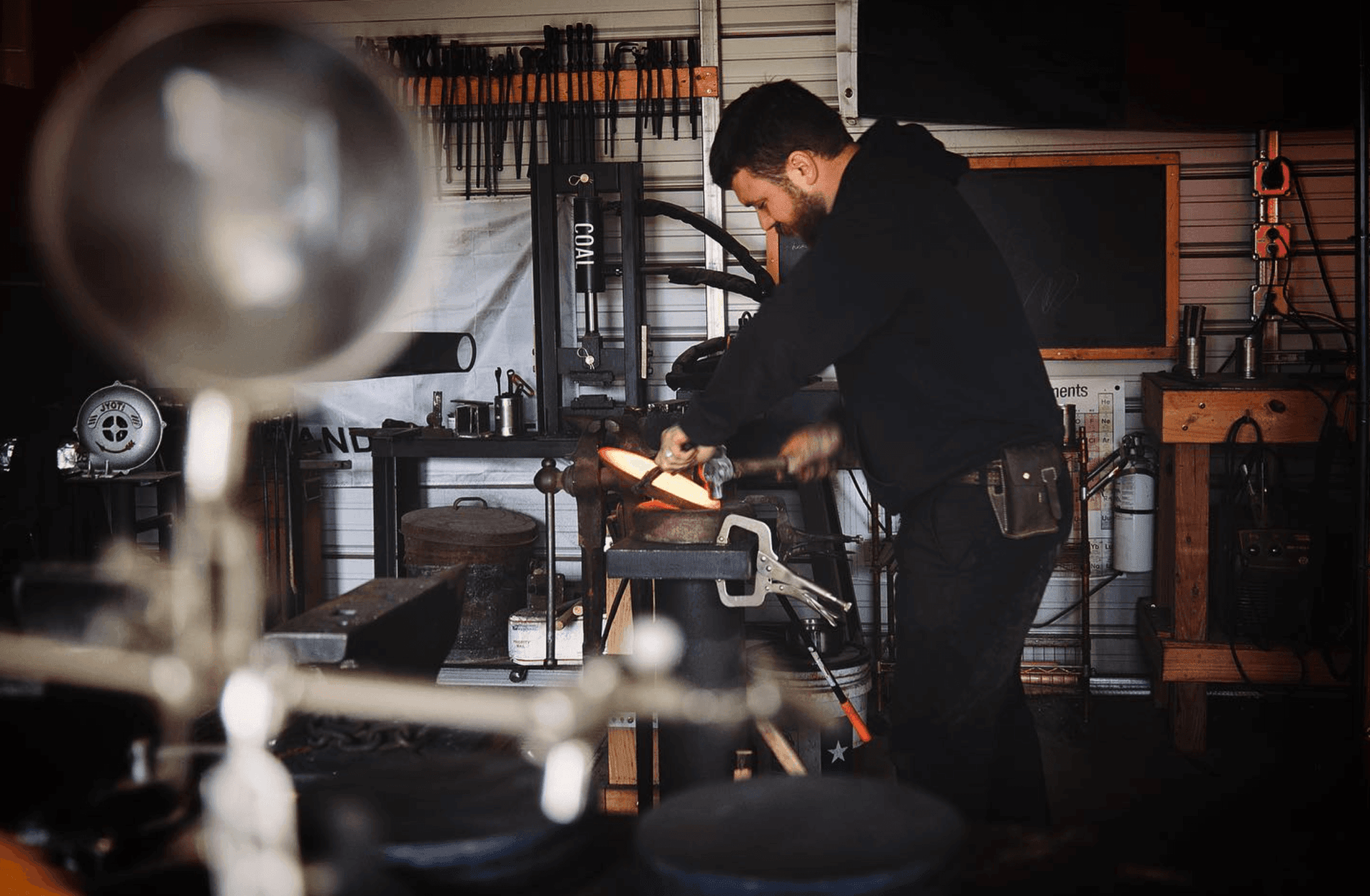
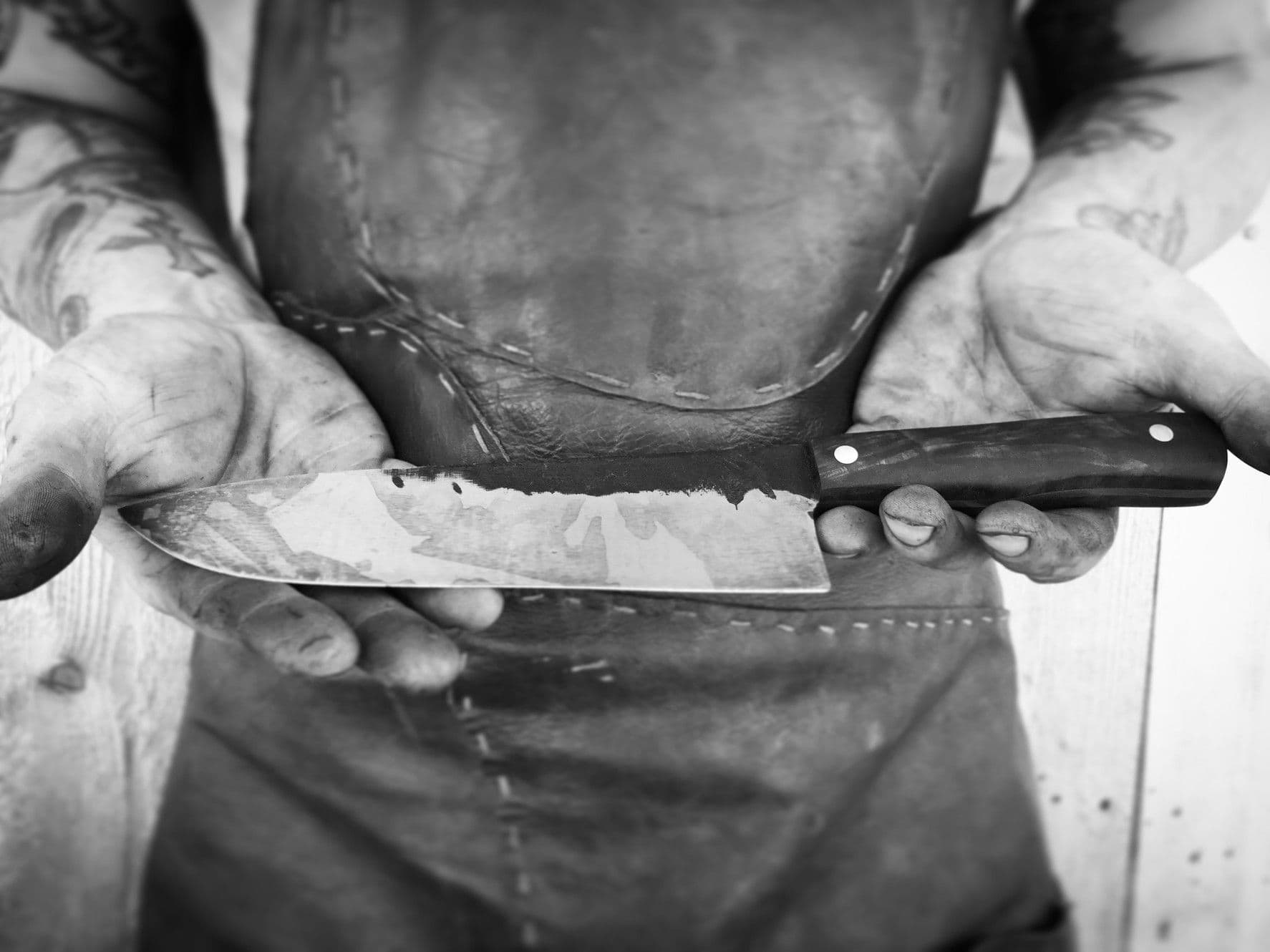
I’m still swinging a hammer on a daily basis and there’s no tool that leaves the shop that doesn’t pass through my hands at least one time.
Explore the Collection
Get to know the people, process, and materials behind Iron Grove Tool Company’s hand-forged knives.
Learn more on the Iron Grove Tool Company website.
Explore beyond the story
Browse listings, find businesses, or save this article for later.
 Listings
 Directory
Get the Newsletter
One reported story on Texas land, delivered free every month.
By signing up, you agree to receive emails from Texas Ranches. We never sell your address, and you can unsubscribe anytime.